
Strike a pose
Teaching and presenting for the PhD. Plus, the Music Highlight

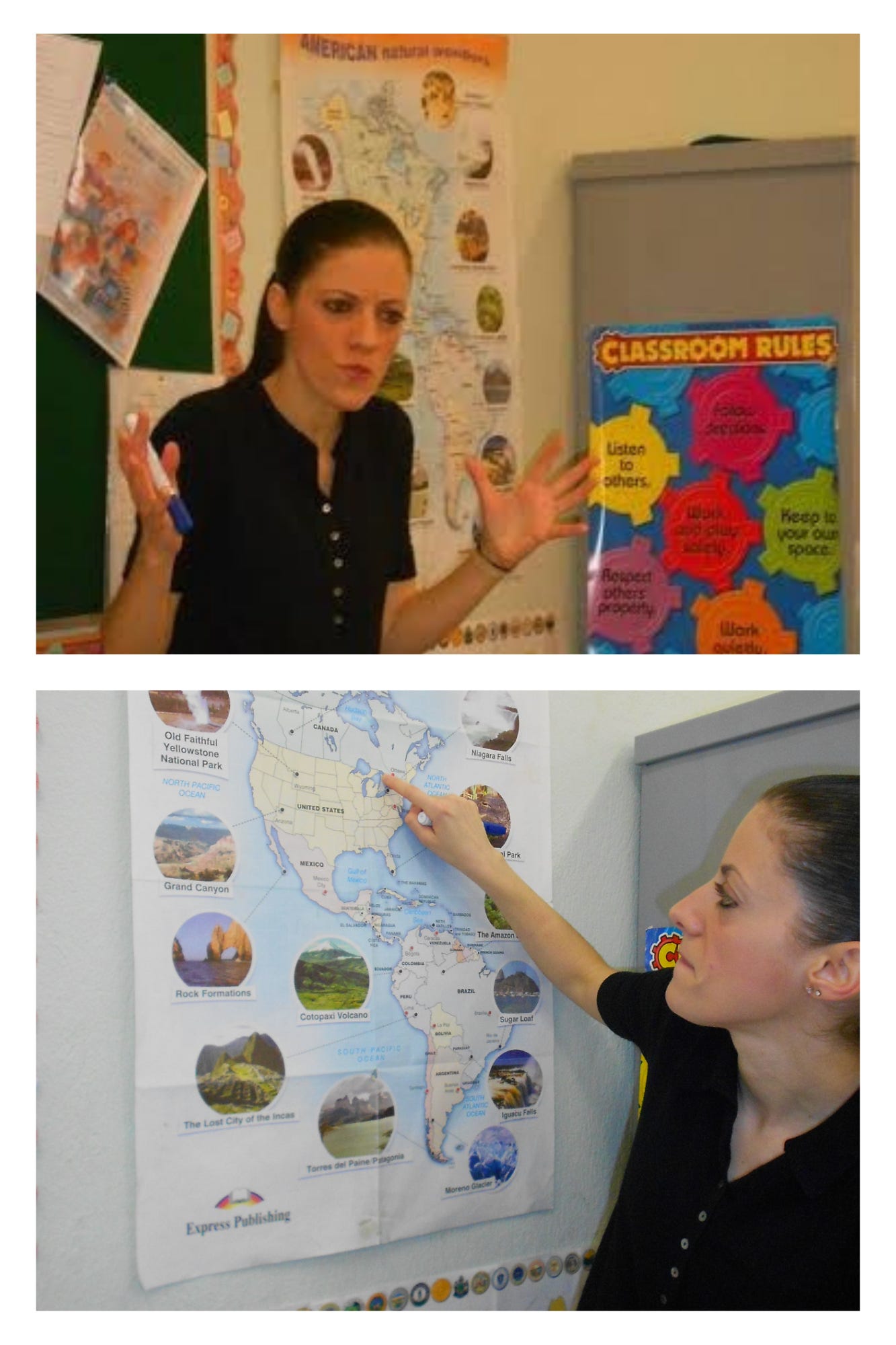
(Photos taken by Aphrodite Giouris, a wonderful primary school teacher whose classes I taught as a guest in 2014, in Larissa, Greece.)
No matter where we are in our PhD, we all strike poses far more often than we realise.
We do it when we step up to give a talk at a conference.
We do it when we teach - whether we are at the front, sitting at a table, or speaking through a screen.
We even do it when we go into our supervisor’s office, open Zoom, or join a panel discussion.
These poses are not about performance or perfection.
They are about presence - and presence looks different for every scholar.
Some of us feel safe when we stand behind a podium.
Some of us teach best while sitting, with our notes spread across a table.
Some of us use mobility aids or have invisible illnesses and disabilities, and present with a stability and grace that comes from honouring our bodies’ needs.
Some of us feel most confident online, where a well-placed camera, a favourite sweater, or a supportive chair helps us speak with clarity and calm.
All of these are valid.
All of these are powerful.
All of these are poses that carry our research into the world.
What matters is not the shape of the body, but the shape of who we are and what we are doing:
The way we take a breath before beginning anything at all. (One of my mentors, Simon Greenall, always told me to smile to myself before I did a talk, or was ready to welcome my class, anything - and it works! I am so grateful to him for all his mentorship and later on, wonderful friendship. If you’d like to see what an amazing human being he was, please read here.)
The way we arrange our materials so they support us.
The way we choose a position that is convenient and safe for us - standing, sitting, leaning - that honour a annd respects our abilities, boundaries, and comfort.
The way we create a sense of “I am here, and this work that I am doing matters.”
In a PhD, so much emphasis is placed on producing, publishing, and proving ourselves. However, something often gets lost: how we inhabit our academic spaces is part of our scholarship.
So whether we are preparing to teach, defend, present, supervise, or simply show up for another long research day, here’s a gentle reminder for all of us:
✨ We should strike the pose that supports us.
✨ We can claim the space in whatever way feels safe and accessible for us.
✨ Our presence - however it looks - is enough!
And sometimes we should simply be allowing ourselves to take up space in ways that reflect our actual lives.
We bring our ideas, our questions, our humour, our experience, our characters, our family situations, our joys and problems - and yes, our bodies, in all their variety - with us.
That is the real pose! So go on and strike the pose that is for you!
The Music Highlight
And of course, one of theeeeee best songs by Madonna which sparked a whole choreography/pose movement in the early 90s!
Eugenia - my big sister, biggest supporter and top commenter - this one is for you!
This is a great post. I love the advice of smiling to yourself. Mine has always been so a few jumping jacks before a speech to lighten up and bring good energy.
Vicky, thanks for your terrific post. The word that stood out for me is "presence." This is what the "AI can teach and do everything" advocates miss. Our human presence.
The Community of Inquiry Framework guided my teaching. Developed to explain online teaching roles in providing valuable learning experiences for students, applies in person as well. (https://www.thecommunityofinquiry.org/framework) They describe three inter-related ways to understand presence. Social presence means you create a non-judgmental learning environment, communicate clearly, are friendly and approachable. Cognitive presence means you encourage critical and creative thinking, and intellectual growth. Teaching presence means you carry out the activities associated with instruction, facilitation, selection of readings and design of engaging learning activities, and fair assessment.
Think about the amazing professors you've had - how were they present for you and your learning journey? Think about the not-so-good ones - where did they fall down? Were they out of balance, maybe too "social" and not enough "cognitive" presence? Or all teaching and no social presence, so the class seemed flat and boring? Using this framework helped me stay attentive to the balance.